Aruba Sea Turtle Season: Beach Etiquette for Visitors
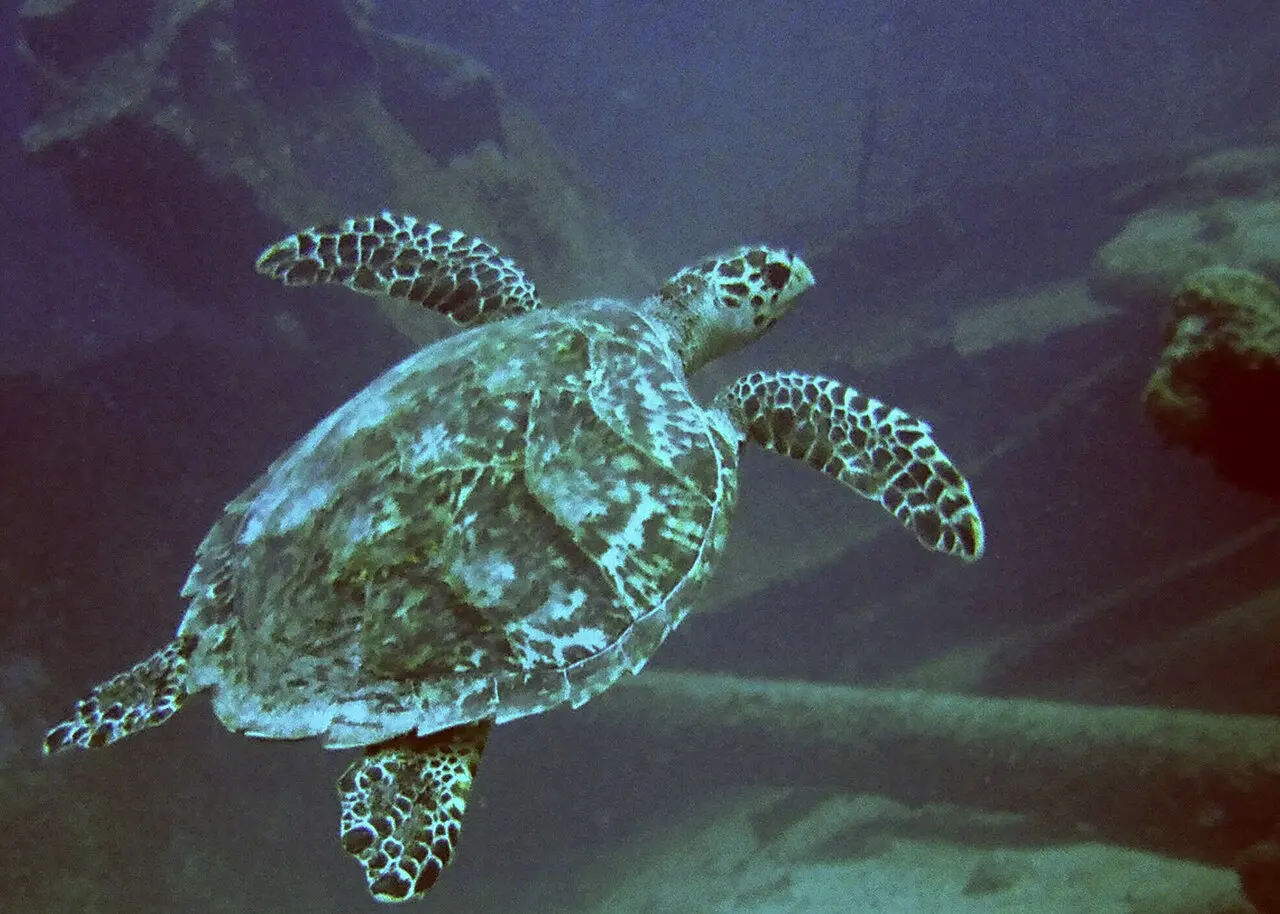
Four species of sea turtle use Aruba's beaches: leatherback, hawksbill, green, and loggerhead. If you are on the island at the right time of year, you may be near a nest. Here is when it happens and how to behave.
When is turtle season?
According to Aruba's tourism office, nesting runs from March to September, and hatching takes place from May to November. So if you visit anywhere from March through November, you are in the window for one or the other.
Where do they nest?
The tourism office names Eagle Beach, where nesting and hatching are often visible along the low-rise hotel area. It also names Boca Grandi and Arikok National Park, and says Palm Beach had a few nests in 2012, which was unusual. Arashi is not on that list. Nests can appear in places nobody expected, so follow the same rules on any Aruba beach.
If you see a nest or a hatching
Call Turtuga Aruba at +297 5929393. Then stay back and let them handle it. Do not touch the hatchlings. Let them crawl to the water by themselves. The tourism office says that is how they imprint on their home beach.
Rules for the beach at night
- Turn off all lights, including flashlights, camera flashes, and video lights. Light can pull hatchlings inland, where they may die.
- Keep your distance from a nesting female so you do not scare her off.
- Do not drive on the beach. Vehicles pack the sand and make nesting harder.
- Do not leave litter, especially plastic bags and balloons, which turtles may eat.
- Move chairs and equipment out of the way. Obstacles can stop females from nesting or trap them.
What this means for your sunset walk
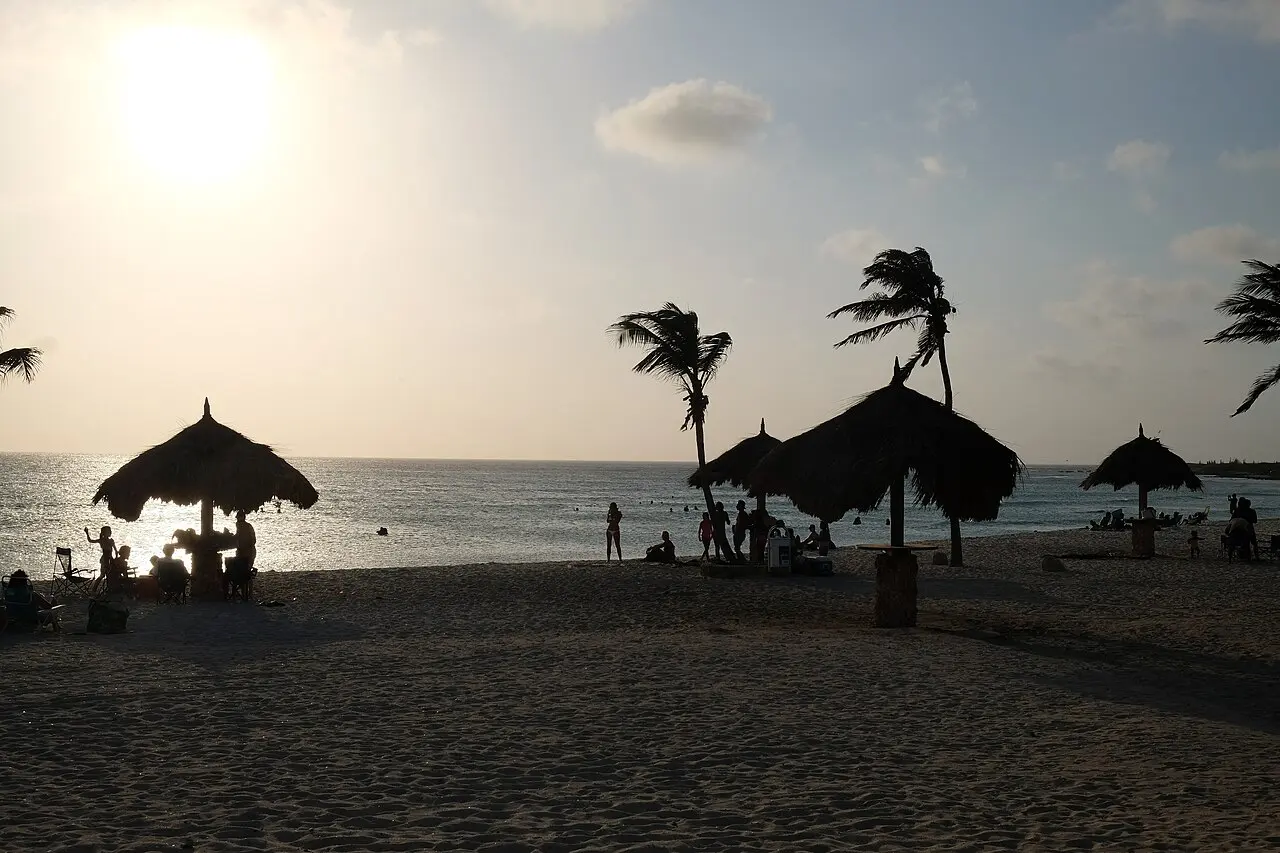
If you stay on the sand after dark at any beach during the season, use the lowest light you can and keep your phone flashlight off near the waterline. Walk close to the water, where the sand is firm, rather than through the upper beach where nests are dug. If you see something moving, stop and look before you take another step.
Daytime habits that help
- Fill in any holes you or your kids dig. A hole can trap a hatchling or a nesting female.
- Knock down big sand castles before you leave.
- Take all your trash with you, including small pieces of food wrap.
- Use oxybenzone-free sunscreen. Aruba's ban targets a chemical linked to reef damage, and turtles live in the same waters.
- Do not feed turtles if you see them while snorkeling. The code of conduct bans feeding marine life.
Seeing a turtle in the water
Stay calm and keep your distance. Do not chase it or touch it. Let it move away on its own. A quiet swimmer often gets the longest look.
Teaching kids to do it right
Turtle season is a good excuse to teach kids how to treat a beach. Let them be the ones to check that the holes are filled and the trash is gone. If you are bringing little ones to the north end, our Arashi with kids post has more ideas.
A day on the sand with a light footprint
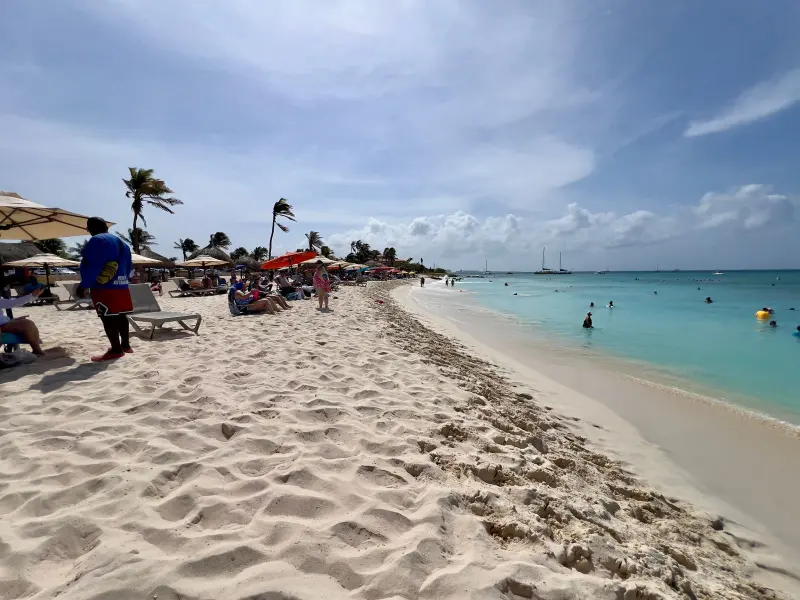
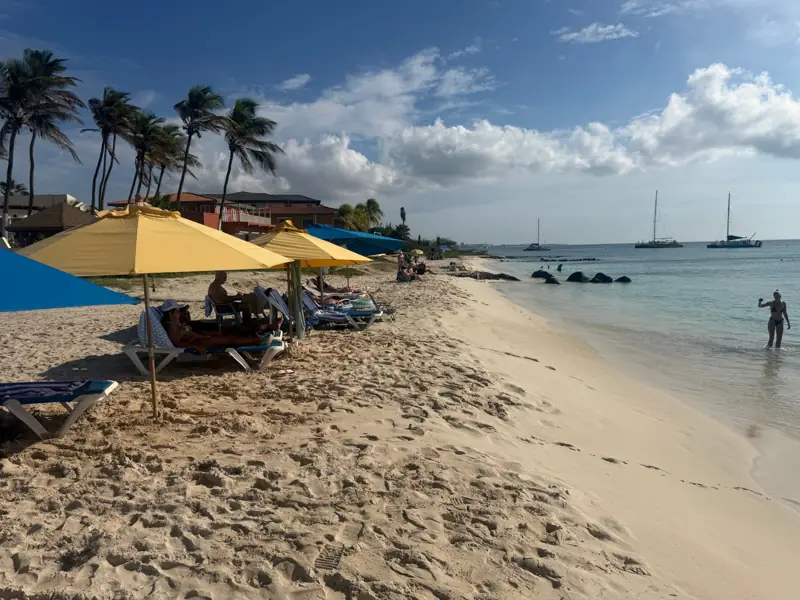
Our sets are placed before you arrive and are held only during the day, from 9:00 AM to 5:00 PM. You get one big umbrella and two beach chairs, anchored in place, for $120.00 per set per day, all in. You can leave and come back as often as you like.
Book a set at Arashi at least 24 hours ahead. Confirmation comes right away with a map.
Source: Aruba.com: Protecting Sea Turtles, Aruba Code of Conduct, VisitAruba: Plastics and Oxybenzone Ban. Conditions change, so check on the day.
 Book your set: $120 a day